Saturday, September 24, 2016

Tunnel Lite Marathon Race Report


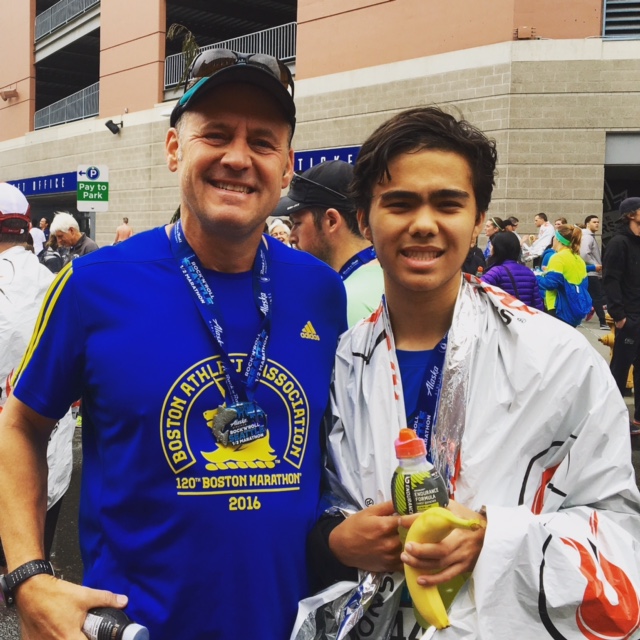
It's been an incredible year of training and racing in celebration of turning 50 last December. Last Sunday's Tunnel Lite Marathon concluded a 12 month stretch that included three full marathon training cycles (December 2015 Honolulu Marathon, April 2016 Boston Marathon and the September 2016 Tunnel Lite Marathon),  two half marathons (Rain Day Half January 2016 and Seattle Rock-n-Roll Half June 2016) as well as the Ragnar Relay in July (Sub-Masters team win) and an 8K and 5K for good measure.  In total the last 52 weeks of training was just short of 2000 miles at 1940 total -- which included limited mileage in the winter due to a nasty lower right leg tendon injury I fought from February through April.    Suffice it to say that my run last Sunday was coming on tired mind and body -- knowing full well that I'd also managed to hit peak fitness/speed sometime in late July and was starting to fall off my top training times and heart rate levels.    
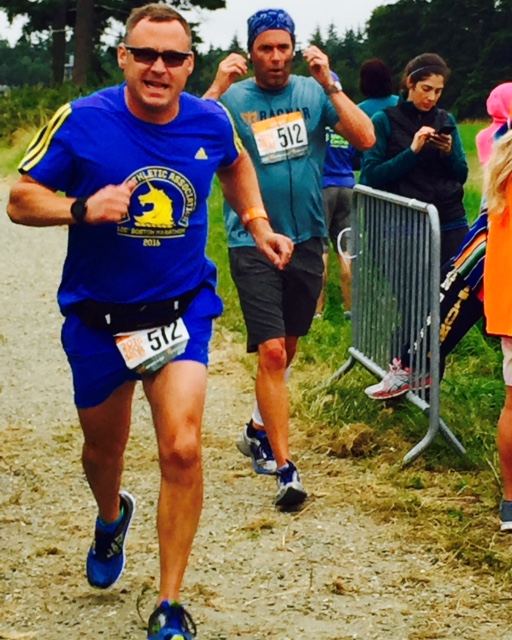
Somewhere around mile 15 of the Tunnel Lite Marathon.  My quads were starting to take a real beating from the downhill here as I passed the photographer trying to look strong and knowing I had another 10 miles in front of me.

I loved this marathon for its beauty, simplicity and that it was just 600 total runners and executed like a finely oiled machine.  And lest I forget the primary selling point -- it's a 2000', vertical drop for 23 miles or about a negative 1.6% to the finish line just east of North Bend, WA from mile 3.    The other main feature of this race is that at about the 1/2 mile mark, you enter into an old railroad tunnel that is devoid of light (other than hundreds of headlamps and flashlights) through which we ran 2.3 miles to the light (hence the name of the race -- "Tunnel Lite Marathon").     My goal was to run a sub 3:30 BQ here and get back to Boston for 2017 (as the race fell right in them middle of the 2017 Boston Marathon entrance window) -- but realistically I knew that I had peaked a few weeks earlier and had been suffering the last month or so from some cumulative fatigue that had set in which would make a great time on this downhill track an uphill challenge.   I was however resolved to see if I could dig it out and decided to run an aggressive opening half to see if I could hang on over the back half of the race.
It was nice simply getting up around 4:30 AM for an 8:00 am race time, fueling about 150 grams of carbs which included a "roadie" smoothie" -- and driving the 25 miles on the freeway to the bus pick-up point just east of North Bend.     I parked my car in a non-descript parking lot before sunrise and simply walked over to a waiting yellow school bus which in turn took off and drove another 25 miles or so eastward up and over Snoqualmie Pass to Hyak (just short of Keechelus Lake) off Interstate 90.
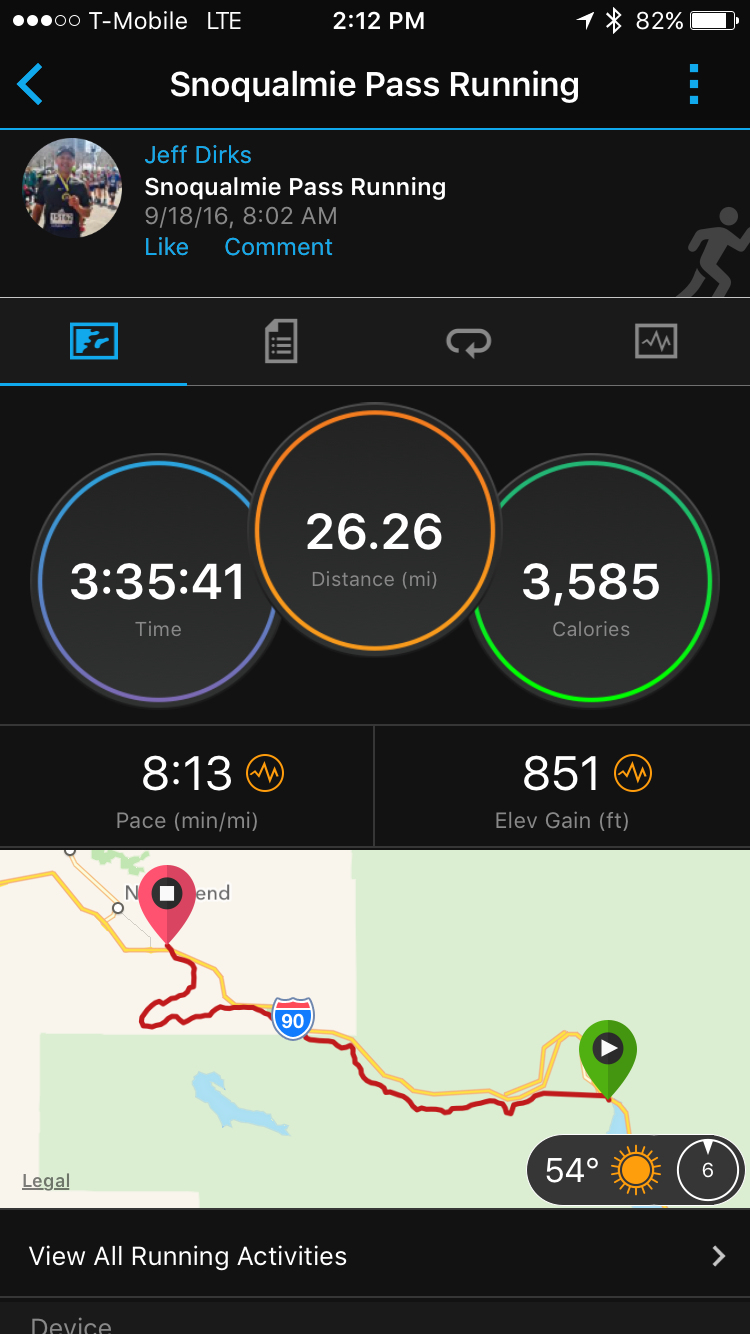
Of my 9 marathons, this was my 3rd fastest time -- and easily the best racing weather I've experienced.  7 of my 9 marathons have featured simply terrible to non-ideal weather so it was great to catch a weather break this time.
In terms of racing strategy, if I was going to run below 3:30:00, I believed I had to get out strongly and take advantage of the downhill, building a time buffer and then hold on over the last 5 miles -- ideally running 8:00 pace or at least nothing slower than 8:20's for the final 5 miles.    

The terrain for the course was a converted railroad track that was mostly compact dirt and rocks becoming gravel over the latter stages of the course.    Nearly half of my training this last year has been on the Cross Kirkland Corridor trail which is also a converted railroad track composed of soft gravel and compact dirt - so I felt comfortable that I'd be fine on the terrain.     As it turns out, the first 10 miles of the trail was actually quarter or larger sized rocks, some gravel, dirt and smaller ruts and undulations -- that were easy to navigate -- but really made the run more jarring on the quads.   I knew was going to be a problem later in the race (in comparison, running on a smooth asphalt or gravel trail is less jarring and one is able to glide and be more economical with muscle movement which conserves energy that's required for the last 5-6 miles of the marathon).    

I got through the first 5 miles (which included the 2.3 mile jaunt through the tunnel which was a little harder to run quickly than anticipated) in 7:46 pace and 38:51 and 10 miles in 77:38 and 7:45's.   At mile 10 I was feeling a lot more quad weariness than I expected (it felt like I'd already gone through 18 miles or so in fact) from the jarring but I was able to press on and get to the half marathon point in a great time of 1:41:30 and 7:46 pace.   I was right on my race strategy and within 7 seconds per mile pace of my PR at 3:20:00.    However, the quad soreness and fatigue was mounting and I knew I had to back it down a bit.   

At mile 14 I had been running with a group of men all shooting for sub 3:25:00.  We were running comfortably for 10 or so miles together, chatting and just getting into the groove as the miles passed by.   However, I stopped to walk the water station before mile 14 to see if I could gather a bit and decrease the quad fatigue before resuming running -- cutting my pace back to around 8:00 or even a little slower as I had a good buffer of time built up.    I ran miles 14 - 20 in about 50 minutes or 8:17 pace and got to mile 20 in just under 2:40:00 (which is 8:00 pace).   I was still in the game late in the race for a BQ -- if I could simply just muster and rally through the quad fatigue.    In my training in the summer,  I consistently ran fast-finish long runs where I'd cut-down miles 16 - 22 below 8:00 pace and even miles 21-22 in around 7:40 pace to practice for this exact moment.      

But the downhill grade was really starting to take a toll on me.   I slowed running mile 21 in 8:36 and then the dreaded 9:00's set in and I ran 9:15, 9:11, 8:55, 9:16 and 9:05 in (20-30 seconds of each mile was walking trying to re-focus and then rally to something below 8:00 pace).  But as the final miles clicked off I realized I was out of reach of a BQ and I relaxed and got through to the finish line in 3:35:39.     I was very very pleased with my race outcome given the fact that I'd peaked in late July, been feeling run-down the last 6 weeks but still at mile 22 had a 3:30 in my gun sights.  

I also realized on the back half of the race that racing Boston in 2017 would require me to get back into marathon training in early January which felt overwhelming giving I've come off 3 races in 9 months and 5 marathons going back to Portland in October 2014 over 23 months.  

My opening half was 1:41:30.  I then faded running the concluding half in 1:54:00 or so which is a large positive split -- but I made a conscious decision to go out hard and try to hang on -- and this is the sort of thing which happens with aggressive race plans.   I wanted to win big or blow up trying. I had nothing to lose anyway, right?    

Subject to my next blog posting -- the leg pain from Monday-Thusday this week was incredible.  It didn't help I jumped on an airplane and flew all day Monday morning after Sunday's race, but suffice it to say running a downhill marathon requires a little more specialized training than I anticipated.   

I can't wait to do this race again.  The next running of it is June 2017 and I will be laced up and ready to go!  Can't wait. 

Looking to the SW at sunrise from Hyak.   The full moon is visible through the wispy fog/clouds at 2500' elevation.


Sunrise with a full moon over Hyak at about 7:00 AM.   Pre-race temperatures were in the upper 40's and a little cool -- but absolutely perfect for racing a marathon.

Looking at one of the ski runs at Snoqualmie Pass at about 7:30 AM.

The race route feather 4 high elevation overpasses that were breathtaking. I tried to run as close to the side as I could to see down and distract myself from the growing pain in my quads as I ran towards the finish line which was still some 10 miles away at this point of the race.


Sunday, July 17, 2016

WE WON -- Men's Submasters Win at the Ragnar Relay NW Passage


I am proud to say tonight that my son Ethan and I were both members of the winning Men's Submasters team "Sandbaggers" at this weekend's Ragnar Relay Northwest Passage covering 196 hilly miles in 26:00:35 which was 7:55 average pace per mile.
Team Sandbaggers enjoying the ferry ride back from Whidbey Island to Mukilteo after completing the 196 mile Ragnar Relay Northwest Passage.  It was perfect weather for this year's event.
Sandbaggers take first place by over 30 minutes.  The 2nd place team was on the first mile of the 36th and final leg when we crossed the finish line 4 miles ahead.
For anyone not familiar with the format of a Ragnar relay, a team consists of twelve runners who are broken into two vans of six runners each.   The entire relay consists of thirty-six legs beginning at the U.S. / Canadian border at the Peace Arch in Blaine, WA and then works its way south through Bellingham, the Skagit Flats, Burlington and then onto Widbey Island across Deception Pass and into Oak Harbor, Coupeville and then Langley for the finish.   

The six runners in van-1 run six successive legs of varying length before handing off to the six runners in van-2 who then do the same succession before handing back off to the runners in van-1.   

When the runners in a van hand the baton off to the other van, they drive to the next rally point  where they will resume running once the other van has covered its next six legs which typically is around 25-30 miles and 4-5 hours in duration.  During this 4-5 hours, runners are able to try and grab a quick meal, rest, replenish and prepare to resume running their next leg of the relay.   

For this year's relay, I ran legs 7, 19, and 31 with distance of 3.85, 10.5 and 6.1 miles.    Each leg featured significant hill climbs with leg-7 being the easiest and leg-19 the hardest with 3 major hill climbs and a start time of 12:30 am.    My son Ethan received the baton from me running legs 8, 20, and 32 with lengths of 6.0, 5.5 and 7.7 miles.   

My first leg was a bit of a joke running through downtown Bellingham and late afternoon Friday traffic (I had to stop at a light for 20 seconds before traffic cleared).   I hadn't run since Monday and rolled the first mile in 7:22 before fading in the heat and running an 8:40 final .85 mile up a hill and being passed by 2 runners.   It wasn't a great confidence builder.  

My second leg was far better, coming at the hand-off from van-1 who had just completed leg-18. Leg-19 is probably the 2nd hardest leg of the whole relay spanning 10.5 miles and 750' of hills in the pitch black of some rural roads leading into Anacortes, WA.  I was armed with a green strobe on the back of my running t-shirt and a headlamp with front and back lights.  The front headlamp was just OK for spotting potholes and other variations in the terrain as I ran (Ragnar is supposed to be run on sidewalks when possible, but I determined early in the blackness of this run that it's far safer to simply run in the road while keeping a careful eye on the incoming traffic so as to avoid a nasty sprained ankle from missing a curb).    I was passed fairly early in the race by 2 runners easily running sub 6:00 pace (both of whom were probably 150 lbs) before hitting my own rhythm and settling in and passing 20 runners (representing 20 teams; each pass for a runner is called a "road kill") and running a solid 7:51 average pace through 3 hill climbs and descents that easily rival the Newton Hills of the Boston Marathon.    My splits on this leg were 7:42, 7:58, 8:41, 7:13, 7:51, 8:00, 8:11, 7:08, 8:20, 7:41, and a final 1/2 mile in 3:26 for a 7:10 closing speed.     The most memorable moment occurred near the end of the leg with a runner about 25' in front of me falling hard having missed a deep pothole in the road on the hill climb through mile 8.   

My third and final leg came after van-2 completed leg 24 at about 6:00 AM.   We arrived into Coupeville, WA about 6:30 am (30 minute drive from the end of leg-24 to the start of leg-31) which provided me just enough time for a quick shower and some eggs and sausage at the school cafeteria before laying out my sleeping cushion and bag and grabbing 75 minutes of rest before getting up and getting the hand-off from the final van-1 runner (see picture below) between legs 30 and 31.    My final leg-31 was arguably the most scenic of the whole relay starting in downtown Coupeville and then heading out to the Admiralty Inlet on a slight downhill track before climbing a significant 1 mile length hill between miles 2 and 3 before then wending its way towards Admiralty Bay.   My legs were absolutely screaming in fatigue after the hard, hilly 10.5 miler just 7 hours earlier.  On this leg  I passed  a total of 10 runners (and was passed by a sole runner) and ran splits of 7:12, 8:38, 8:01, 7:10, 7:51, and 7:45.   I gave this leg all I had and was rewarded with an average pace of 7:45 across some fairly hard terrain.     

Quick Tips on Running a Ragnar Relay
  • Be prepared to not sleep and get two good nights of rest on Wednesday and Thursday
  • About a month in advance, try and do 3 very hilly runs spanning 18-21 total miles in a 30 hour period.
  • As soon as you are done running -- Immediately hydrate with electrolytes and a great recovery drink with a 2:1 carb/protein grams mix within 10 minutes of concluding your running leg.  If your stomach will tolerate it, take 400 - 600 grams of ibuprofen.  
  • Wear compression socks between your running legs
  • Even if you can't sleep during the 4-5 hours of downtime, be sure to take in 500-1000 calories of nutrition and lay down for 60 - 90 minutes and be off your feet.   Sleep outside under the stars if you can; and not in the gyms which are hot and stuffy and loud.
  • A location-sharing app like Glympse is great for providing up to the second information on where a runner is at on her/his running leg.
  • Don't drink during the 2 breaks between vans and caffeine is your friend.  
  • Bring toilet paper with you for your runs.


Ethan and I at the exchange point in Bellingham, WA between leg 6 and leg 7 (which was the starting leg for van-2)
Little did I know when this picture was taken this easy leg of 3.85 miles would be by far the easiest -- and my slowest leg of the relay.   I hadn't run since Monday coming into my first leg on Friday as I was feeling beat up from a 50 mile training week last week.   I only passed 1 runner and was passed by 2 runners at the end which made me more than a little grumpy.  

Ethan and I sleeping under the starts in Oak Harbor after completing leg-12.  We had about 90 minutes of downtime before resuming our running on leg-13 about 12:40 AM.

Elevation map for my 10.5 mile leg-19 which featured 3 long hill climbs of .80, 1.5 and .50 miles in duration. The final climb was at 7% incline.

Pace chart for Leg-19.  Couldn't be more pleased.

Hand-off at the conclusion of Ethan's 5.5 mile leg-20 to a short 2.5 mile leg-21.  

Grabbing a quick 75 minutes of downtime before resuming our running on Saturday morning in Coupeville, WA.


31st leg of the relay and my 3rd and final.   I gave it all I had and passed 10 runners enroute to passing the baton to my son Ethan for his final 7.7 mile leg-3.

Inspired hand-off between leg-30 and leg-31.   It's amazing what coffee does for the heart and soul after no sleep.

Me and Ethan at the conclusion of his 7.7 mile final leg (32nd leg overall).  Ethan's first and third leg featured major hill climbs which he handled with ease on his 17-year old  fresh legs.

The winning Sandbaggers team shot at the finish line of the Ragnar Relay NW Passage.


Saturday, July 9, 2016

Who Says You Can't Go Home


I was born and raised in Walla Walla, Washington which is situated about 250 miles to the SE of Seattle in Southeastern Washington just north of the Oregon border.    Walla Walla had an established Indian (Nez Perce) trading post as early as1818 but really didn't become settled until the arrival of Marcus and Narcissa Whitman in 1836 and the establishment of the Whitman Mission.  The Whitman's were later killed by the local Cayuse Indians due to their bringing disease to the tribe which resulted in an epidemic leading to Cayuse Indian deaths.  

Eventually Fort Walla Walla was established by the U.S. Army in the 1850's and the settlement of Walla Walla really began in earnest eventually leading to it being the largest town in the Washington Territory before growth in Seattle overtook it (and even considered as the eventual Washington State Capital in the latter 1800's).      

Today Walla Walla is largely known for it's outstanding wines with over 100 wineries alone in and around the town itself.    As a kid growing up, Walla Walla was known by us "townies" as the home of the Washington State Penitentiary, Whitman College,  Walla Walla Sweet Onions and miles upon miles of golden wheat fields among other crops.   Many of us are descendants of Italians who migrated to the Walla Walla Valley in the 1890's who were enroute from California to a gold strike in northern Idaho when the gold strike dried up.   Many of the Italians stayed and farmed and brought some of the traditions of onion farming and wine making from the old country which have since grown into the economic backbone for the region.    

My mom's side of the family (Mele's, Frazari's, Locati's, Leonetti's) generally migrated from Calabria (southern Italy across from Sicily) in the 1890's and early 1900's.   My great-great grandma and her parents arriving around 1904 to Walla Walla.    

Setting aside all of the history of agriculture, Walla Walla is simply a fantastic place to train.   I never miss a chance when I am in town to steal out on a 10-20 mile run out to the Blue Mountains and back just to soak up the fragrant air, smell of the wheat fields and general peacefulness of running far into the country side at 6:00 AM on a Sunday before anyone but the farmers are up and about.    

It was here during the summer of 1984 as I prepared to enter active duty in the U.S. Army that I trained running 6-8 miles and cycling 25-30 miles 5-6 days a week.  I simply loved training and getting out on the hot and clear mornings with temperatures already in the upper 70's and getting miles of training in.     I still feel this love today when I am home 32 years later -- often running some of the very same routes I did as an 18 year old preparing for Army basic training in September of 1984.  

Since then, I've only run a single half marathon in Walla Walla (2010 Walla Walla Half Marathon) and regret not getting back and running the Walla Walla Marathon which was raced circa 2008 - 2015 before being cancelled (not sure what happened with the race director or its postponement).  

I'll be back in Walla Walla in a few weeks and plan to roll a nice easy 22 miler out to the Blue Mountains and back -- and I will soak up and relish every moment of growing up a small town boy and having the chance to get back to my roots as frequently as I do.  

Who says you can't go home!

About 3 miles from downtown Walla Walla, Main Street is Cottonwood Road which 5 miles from the base of the Blue Mountains and a left hand turn onto Foster Road. It's about 1-1.5% hill climb all the way out.

The golden wheat fields of July looking up towards Cottonwood Hollow from Cook Rd.

Looking south into Oregon about a mile away.

Lavender-lined driveway of Walla Walla Vintners and A'Maurice Vineyards on the Mill Creek Road.

Saturday, June 18, 2016

Seattle Rock 'N' Roll Half Marathon Race Report


My 5th race of the year is in the bag for 2016.   I ran a 1:37:49 half marathon today placing 303/11689 overall and 11/373 in my age group and setting a personal RnR half marathon race PR for me by nearly 90 seconds (half marathon PR is 1:34:20 from 2010).    It was an extra special race morning for me as I was racing with my 17 year old son, Ethan, who was running only his 2nd half marathon this morning.

Race conditions last night looked dire with rain and wind and chilly temperatures forecast; however, 4:30 came this morning and temperatures were in the low 50's with most of the rain having passed and little wind -- perfect weather conditions for a longer race (in fact -- could've used conditions like this morning for this year's Boston Marathon which was warm and windy).  

This year's RnR course changed from prior years which featured a largely uphill closing 5K and sharply uphill final 1K to the finish line on Mercer at Seattle Center. I really disliked the old finish to this race as in back-to-back years I lost nearly a minute of time slogging through the last part of this race's hill climb.    

This year's race started at Seattle Center, however it wended it's way a bit east and then west before connecting with the Battery Street Tunnel and then connecting southbound onto the Seattle Viaduct.   The opening 5K was net downhill.    The race finish line moved back to Century Link Field (believe it was here for the first few years of this race) and featured a mostly downhill closing 2 miles after a 1.55% grade climb throughout all of mile-11.   It was really a nice improvement to the race course design which I think everyone appreciated -- as much as we all had to grind through mile-11.   

My race strategy this morning was based on breaking the race into 3 segments, Miles 1-5, 6-10 and the final 5K.    My goal being to ease into a 37:30, increase to a 37:00 and then roll something like a low 22:00 closing 5K given the net downhill finish.  

I felt very strong at the start of the race and eased into a good rhythm feeling my A-game and hit the opening 5K in 22:36 and through 5 miles in 36:53.   I hit the 10K mark in 45:48 and rolled the second 5 miles in 37:12 crossing 10 miles right at 74:00.   I was feeling very confident with 5K to go that I could run a sub 23:00 and drop down into the 1:36's for a finishing time.   

What I overlooked, however, is that mile 11 is significantly uphill (I should've remembered how much as I've run this race 3 other times) requiring a climb from the shores of Lake Washington up to the I-90 Express Way and then a 3/4 mile run dead west and uphill through the I-90 westbound express tunnel (which was hot and stuffy and really not enjoyable running).    My Garmin 630 stopped working in the tunnel and I figured by effort I was around 7:45 pace.  I was very surprised to emerge from the tunnel and have run an 8:11 - basically crushing what buffer I had to get down comfortably below 1:36.   I can't say whether my GPS not giving me up to the second pace information would've made a difference, but I might've pressed just a little harder.  Hard to say.  My bad ultimately.   

As I emerged from the express lanes tunnel, I saw my son Ethan about 25 seconds out in front of me and knew he must be struggling as he had at least a 2:00 minute lead on my deep into the race (I wasn't even seeing him on the myriad hairpin turns where we would run out 1/4 mile and then come back the exact same direction where you can see the runners in front and behind as you run the stretch).   I immediately figured he didn't fuel properly as he left his 2 gels in the car prior to the race (which I didn't discover until 15 minutes prior).   I'm sure he burned through all of the glycogen in his legs at about mile 8 (where he bonked and slowed) as we was running sub 7:20's comfortably and on pace for something upper 1:34's to mid 1:35's.     

As we crested the hill and headed out of the tunnel, I rolled mile 11 in 7:29 pulling nearly even with Ethan at the start of mile 12 and then turned on the after-burners running mile 12 in 7:05 and accelerating to the finish trying to make up for the bad mile 11 in 8:17.     I ran the final uphill corkscrew up and around past Safeco field and then really tried to pick it up over the last 600 meters to the finish coming in at 1:37:49.    It was a shocking reversal of fortune for me as just 25 minutes earlier I was sure I had plenty of gas to run a sub 23:00 closing 5K vs. a 23:41 where I valiantly tried to make up for the hill gaffe at least grabbing back some time with a 7:05 mile 12.   

All in all I'm pleased with my race performance and am strongly tempted to race another half marathon in 2 weeks before heading back into Marathon training for Marathons in August and September.   

In terms of critiquing my training, it's clear I'm not in great hill shape.  On a flat course today, I'm sure I had 1:36 in me -- if not better -- but I just get gassed on the hills -- even slight hills.  It's residual damage from my Boston Marathon training where I nursed a tendon injury for 3 months and did not hill train at all -- even avoided hills.  Hard to make excuses any longer.  I'm going to get weekly hill intervals into the mix.

Next official race is the Ragnar Relay in July followed by the SeaFair 8K in later July.    I'm looking for a half marathon for me and Ethan to run in 2 weeks that is small, flat and fast!

Me enjoying an early Father's Day gift racing my son Ethan's 2nd half marathon this morning.

Obligatory pre-race starting line photos this morning.

Ethan feeling confident this morning after a hard 5 weeks of half-marathon specific training following a great Junior Year track season at Bellevue High where he PR'd in the mile running a 5:05.  He ran the opening 5 of the half marathon in 35:30.

We were officially corral 4 but moved up to corral 2 and closer to the 1:35 pacer group. 


Post race celebrations.  Half marathons always seem to pass so quickly - which is why I love them.  After you get through the first 5 miles there's not even an hour of running left.  In a marathon, I'm not even warm yet.


Thursday, June 16, 2016

Seattle Rock 'N' Roll Half Marathon - Training is a Wrap!


In thirty-six hours I'll be 45 minutes into running the 2016 Seattle Rock 'N' Roll Half Marathon -- ideally somewhere past the 10K point.    It's been a very fast 5 week training cycle coming off the April 18 Boston Marathon and mid-May Nordstrom Beat the Bridge 8K.    This will be my 4th Rock 'N' Roll half marathon and 3rd consecutive year.  I believe this year's training cycle leading up to the race -- and building on a base that included 2 marathons in a 5 month stretch -- could be the hardest I've trained yet for this distance.  


The last 3 weeks have included some very promising workouts of substance that included a 75-degree half marathon time trial in 1:42 on tired legs, successive 8-mile tempo runs in 7:27 and then 7:24 average pace and 4 x 1 mile intervals in average 7:05 pace.    With a personal PR of 1:34:20 (on a flat course in 2010), a 1:39:20 last year (on a course that was hillier than the modified route for this year's race) and a 1:37:07 in October 2014 - I have a shot at racing one of my better times over the last few years.    I haven't run below 1:36 since the Green River Half Marathon in January 2012 where I went 1:35:50 -- and not sure I have that in me for Saturday, but am going to go out with my A goal being 7:19 pace and sub 1:37:00 with a fallback to anything sub 1:40 depending on how the new course plays out (more hills in the early miles with more of a downhill finish the final 5K).    

The only real glitch I've had this training cycle is that my Garmin FR620 which has been a constant training companion the last twenty-four months refused to re-charge as of last Sunday.   Not being confident I could get it repaired by Garmin in less than 7 days, I decided to upgrade to the Garmin FR 630 (picture below) for Saturday's race.  Thus far I've done a single run on the new watch and had about every issue once can expect running with a complicated piece of new gear after 2 years of something different.   It's not optimal, but my early impressions are positive and I'll make the best of it on Saturday AM.   I'll do a future blog post on whether this upgrade at $399 was worth it given the FR620 was rock solid for 2 years (other than the charging mechanism suddenly dying).   

Racing strategy for Saturday at 7:00 am is to get through the first 10 in sub 74:00 - 74:30 and then knock down a 22:00 closing 5K for something in the neighborhood of 1:36:00.    

Stay tuned.   

Garmin FR630 - my new training companion albeit at an awkward time

Saturday, June 4, 2016

Seattle Rock 'N' Roll Training Update


Today's 13.1 mile half marathon pacing session wiped me out.   This is the end of my third week of a five week half marathon training cycle preparing for the June 18 Seattle Rock 'N' Roll Half Marathon and I am feeling the burn.

I find it somewhat surprising that with such a deep aerobic running base given I ran the December Honolulu and then April Boston Marathon that a trio of 40 mile average training weeks would leave me so spent on a Saturday afternoon, but I am honestly looking forward to tapering the next couple of weeks which is something I would normally somewhat sneer at doing since a half marathon is a relatively straight-forward distance to train for and recover from.  

As I look back on the last 3 weeks of training, each six day revolution had three very hard runs of substance.   My strength intervals every Tuesday have been 4 x 1 mile in 7:10 pace; 4 x 1.5 mile in 7:20 pace and then a brutal 3 x 2 mile session this last week where I averaged around 7:35 pace (all these runs have been on the Cross Kirkland Corridor trail which is dirt and gravel and adds to the workout intensity).  My tempo runs have been 60 minute pacing sessions around 7:25 - 7:30 pace followed by Saturday runs of 14-mile cut-down (average overall pace 8:00 with last 5 miles in 7:30 pace); 2 x 5 mile tempo intervals in 37:30 and 38:30 and then wrapping with this morning's 13.1 time trial in 1:42:15.  

The goal of this five week segment was to really bracket my training with time spent at or around 10K to half marathon pace while buffering these workouts with easy runs at 9:00 pace.     Given I spent so much time preparing for Boston running much slower times due to my injury, I also wanted to get a little footspeed back; although, I haven't really done a lot of track running nor pressed hard on 5K speed work (somewhat in fear of my tendon injury returning).

I set a goal for this morning's half marathon pacing session of something in the 1:38:00 range which I missed by a full 4:00 running 1:42:15.    That being said, I misjudged how warm it was this morning and didn't start running until nearly 8:30 am when it was nearly 70 degrees with little shade on the Lake Sammamish Trail.  If I'd been thinking more clearly about morning temperatures we'd have started around 7:00 am.  Nonetheless, I could feel the heat and cumulative training fatigue on me right away as we took off and had to work hard to get through the first 6.55 miles in 7:42 pace and 50:25 elapsed time (which was about a minute slower than I'd hoped for).    We fought a full headwind all the way running north this morning which added to my slowness -- so I was hopeful as we turned around I'd be able to roll off some 7:30's and dial it in with the wind at my back (but of course the sun now was full on us as we ran back to the south).    Opening 6 miles were in 7:40, 7:43, 7:44, 7:44, 7:45, 7:39 and then 4:08 for .55 mile to 6.55.    

Turning around with the wind at our back I felt energized and quickly rolled off a 7:28 and was feeling bullish about dropping back below 1:40 based on a negative split on the second half; however my energy started to be dampened as I was really heating up in the sun running 7:40, 7:42, 7:47 and then started to really have to work hard at mile 10 running 7:50 before descending into the pain cave and really struggling over the last 5K running a snail-like 7:50, 8:08, 8:22 and 57.1 final .1 mile.   I got through 10 miles in 76:57 and 7:41 pace and then collapsed on the final 5K running 24:20 and 8:06 average pace.    

I don't know why it always amazes me how much the heat takes out of us in terms of speed based on our brain consciously slowing our bodies down (as a form of self preservation), but the temperature at the start of this morning was right where it was for the start of the Boston Marathon (about 70) and then was around 75-77 the last part of the race which was warmer than what we endured over the final 10K as we dropped into Boston and it cooled down.   It seems like I should have been able to better endure it.  But at 50 years old, the heat just crushes me these days.  Although, I think a lot of this is simply being from Seattle as we don't spend a lot of time running in moderate heat which is probably the underlying issue.  I'm not adapted for warmer running temperatures (many wouldn't consider running in 75 degrees that overly warm in other parts of the country).  

So with the half marathon race 2 weeks from this morning, I'm going to work hard to nail my Tuesday intervals (4 x 1 mile), Thursday tempo run (60 minute pacing session) and then a final 10-12 miles easy with a cut-down final 5K at half marathon goal pace for week 4 of this cycle.  

My goal coming into this cycle was to run something below 1:36:00 for the race.    At this point, today's outcome worries me a bit but I also know I have a lot of fatigue on my legs and with a taper and some sharpening I may be able to pull off a great race.   My fallback goal is anything in the 1:38:00's which will leave me in good shape to resume marathon training in mid-July with some decent speed under my belt.  


Saturday, May 28, 2016

Epic Suffering


I'm a big fan of Strava.   For the most part over the last few years I've relied on Garmin Connect for specific running dynamics, split, and heart rate information, but recently re-discovered just how good the Strava app has become.   I originally tried Strava back in 2013 and wasn't impressed after a few runs and deleted the app.   Recently I was on a run and forgot to charge my Garmin 620, but had my iPhone with me and decided for expediency to download Strava and give it another shot.    I was impressed.

The infographic below is from a 12 mile run today I did in preparation for the Seattle Rock-n-Roll Half Marathon I'm racing in 3 weeks.   I'm at the conclusion of what's been 2 great training weeks rolling back-to-back 40-mile weeks and what appears to be a half marathon pace that could be sub 7:30 depending on the weather on race morning in a few weeks.    I'm not sure I actually suffered in an epic fashion today, but I realized that being good at suffering takes a lot of practice -- it doesn't just happen.  I'll write more about this later in a different post.    It's a hard concept to explain and I'm not sure I even have my own thoughts straight on what it takes to be good at suffering on an intense run and how endurance athletes are able to do it.

This afternoons run was effectively 2 x 5 mile tempo run with 1 mile warm-up and warm-downs.    I ran the outbound 5 in 37:30 and the return in a stiff headwind in a somewhat disappointing 38:26.   I realized however once I was on the run that I didn't plan my workouts smartly this week as Thursday afternoon I ran a 60 minute half marathon pacing session in 7:27's which I was still feeling on today's run.    I plan to do a couple of super easy runs the next couple of days and gear up for a half marathon time trial next Saturday which is 2 weeks prior to race day just to see where I'm likely to be.

The goal for this year's race is something in the 1:37's but I really want to get back into the 1:35's before I get back into training in July for a mid-September marathon.    


This will be Ethan's second half marathon this year.   At last year's Rock-n-Roll he ran 1:37:10 on a course that's mostly uphill the last couple of miles with a stiff uphill climb the last 600 meters or so. Apparently this year's course has changed and offers a significantly more downhill run from miles 10 through finish once we climb off Lake Washington Blvd to Interstate 90 and head back on the express lanes towards town.    

I have no chance of hanging with Ethan over the first half of the race as he's significantly faster than me at this point (recently running a 5:05 PR in the mile as a Junior at Bellevue High), but I'm secretly hoping I can get him in my gun sights over the last 5K and chase him down from over the last 3K of the race as we push to the finish line.